
Driven by Environmental Protection and Efficiency, Fiber Ball Filter Media Emerges as a Rising Star in the Water Treatment Market
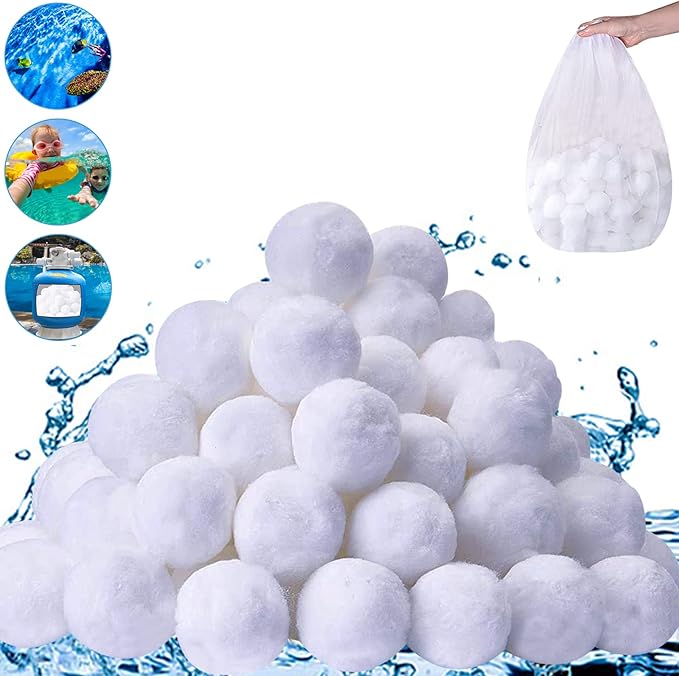
Driven by Environmental Protection and Efficiency, Fiber Ball Filter Media Becomes the "New Favorite" in the Water Treatment Market
In recent years, the selection rate of fiber balls as an efficient filter media has increased significantly across various industrial fields such as water treatment, petrochemicals, food, and pharmaceuticals. They are gradually replacing traditional materials like quartz sand and anthracite coal, becoming a "rising star" in filtration technology. This trend is underpinned by the comprehensive advantages of fiber balls in terms of performance, cost, and environmental friendliness.
Performance Breakthrough: Efficient Filtration and Long-Term Operation
Compared to traditional granular filter media, fiber balls are made of highly elastic polyester fibers, featuring adjustable porosity, a large specific surface area, and strong adsorption capacity. Their unique flexible structure enables higher filtration precision, effectively removing suspended solids, oils, and organic impurities from water. They are particularly suitable for deep bed filtration and fine filtration applications. Experimental data shows that under similar conditions, the filtration speed of fiber ball filter media can be increased by 2-3 times, while backwash water consumption can be reduced by over 30%, significantly enhancing operational efficiency.
A Win-Win for Economy and Environmental Protection
With the maturation of manufacturing processes, the production cost of fiber balls has gradually decreased. Furthermore, their service life can reach 2-3 times that of traditional filter media, reducing long-term replacement frequency and maintenance costs. Additionally, fiber balls exhibit strong chemical corrosion resistance and compressive strength, performing stably in acidic or oily environments, thereby minimizing system downtime risks. From an environmental perspective, their material is recyclable, and backwashing generates less waste, aligning with green production principles.