
Revealing the Principle of Gold Extraction with Coconut Shell Activated Carbon: The Efficient Adsorption Mechanism of a Natural "Gold Catcher"
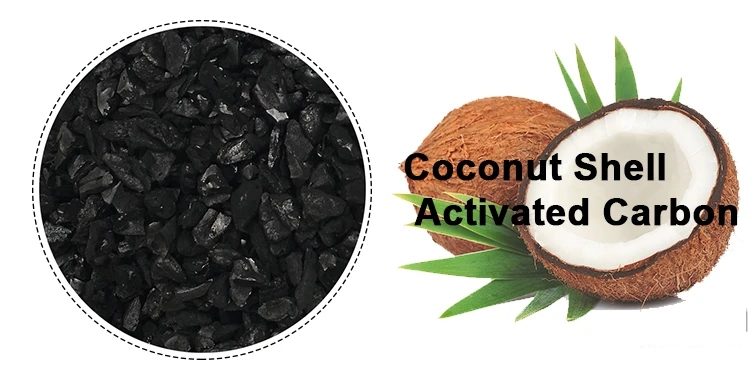
Report - In the gold smelting industry, coconut shell activated carbon has become a core material in gold extraction processes due to its unique properties, and the principle behind its efficient gold extraction has attracted industry attention recently. This adsorbent material derived from natural coconut shells, hailed as a "gold catcher," plays an irreplaceable role in mainstream gold extraction technologies such as Carbon-in-Pulp (CIP) and Carbon-in-Leach (CIL) processes.
According to industry experts, the core of gold extraction using coconut shell activated carbon lies in its well-developed microporous structure and large specific surface area. The pore size is highly matched with the molecular size of gold cyanide complexes, providing abundant adsorption sites. In the gold extraction process, gold-bearing ore is crushed and ground into pulp. After adding cyanide solution, gold is converted into water-soluble gold cyanide complexes. At this point, coconut shell activated carbon is added, and through the synergistic effect of physical adsorption and chemical adsorption, the gold cyanide complexes are firmly "captured" in the pores of the activated carbon, forming gold-loaded carbon that is saturated with adsorption.
It is worth noting that coconut shell activated carbon has extremely strong selective adsorption capacity for gold cyanide complexes, which can effectively reduce interference from base metal impurities such as copper and zinc, and greatly improve the efficiency of subsequent processing. After adsorption is completed, the gold-loaded carbon undergoes processes such as high-temperature and high-pressure desorption and electrolysis, through which gold can be efficiently separated and purified. Meanwhile, the activated carbon itself can be recycled for more than 10 to 20 cycles after regeneration treatment, significantly reducing production costs.
Currently, this process has been widely applied in gold mining fields around the world. With an excellent gold recovery rate of over 99%, it has become a key technical support for improving the economic benefits and resource utilization rate of mines.